An epic 16-day journey through cloud forest and Amazon rainforest
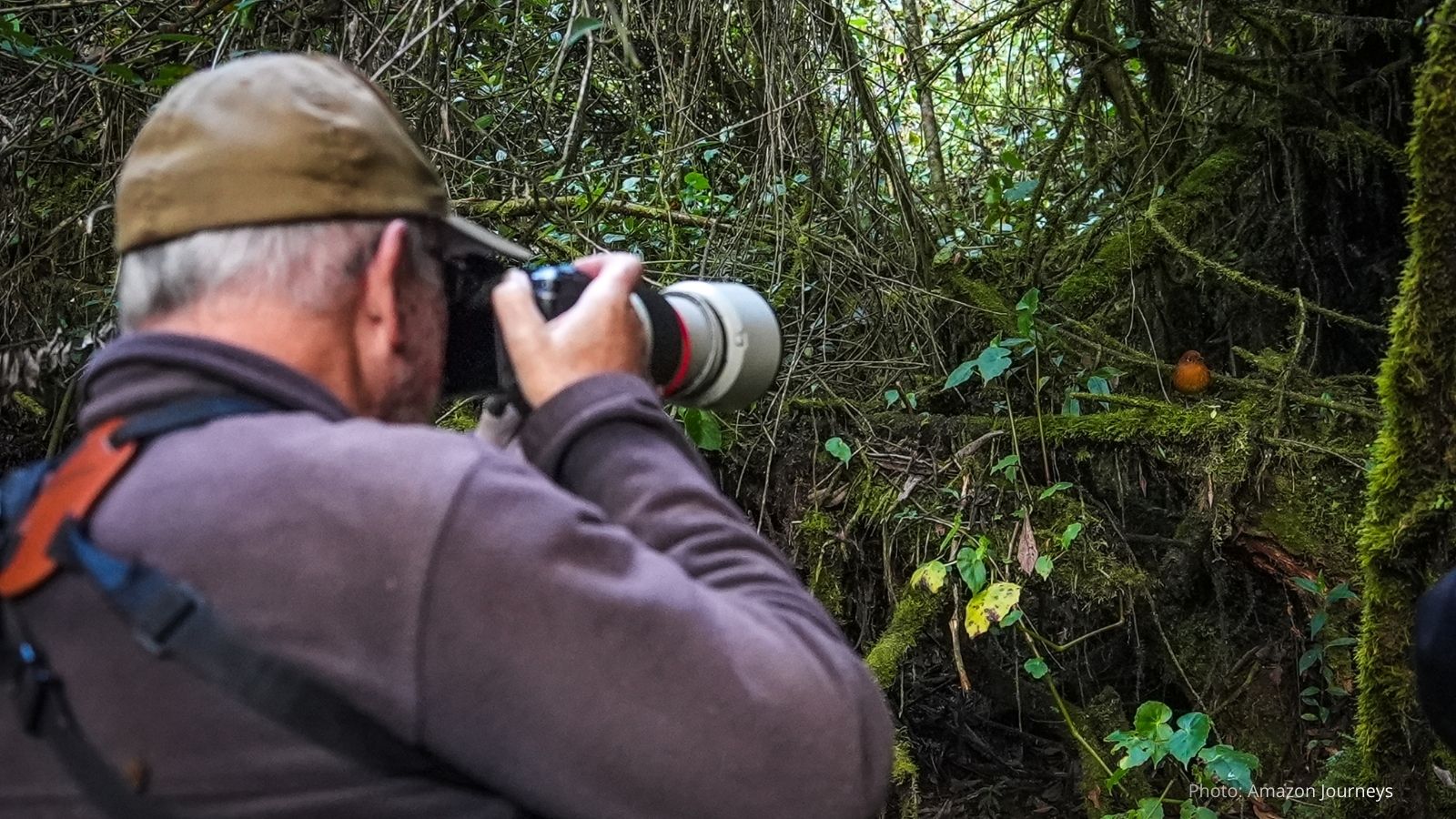
This is a slow‑paced tour focused on getting great photos and spending unhurried time at hummingbird and other feeding stations. The itinerary showcases the incredible biodiversity of south‑eastern Peruvian cloud forests and Amazon rainforest, centring on photography of birds and landscapes, with chances to capture mammals and large reptiles when they appear.
Our birding and photography route takes you into the Manu Biosphere Reserve, a vast protected area of cloud forest, lowland rainforest, oxbow lakes, and flooded forest. This remarkable range of habitats is home to at least 200 species of mammals, more than 800–1,000 bird species, and thousands of trees and other plants.
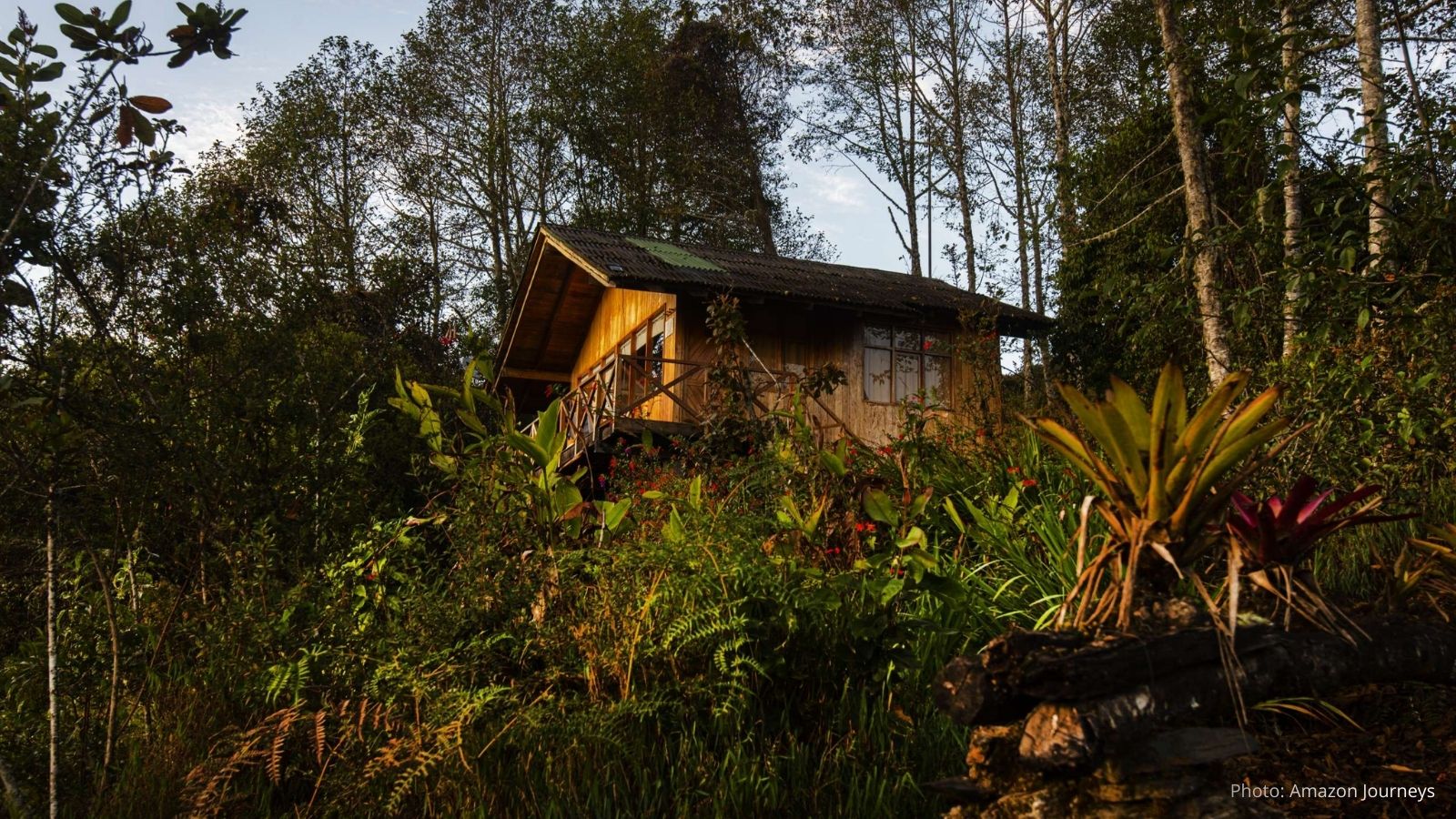
We stay in rustic but comfortable lodges throughout. Unlike many operators, we own and run two of the four lodges you will visit and, most importantly, all funds generated are 100% reinvested in our nonprofit conservation arm.
Included
- 03 Night at Wayqecha Cloud Forest Birding Lodge based on private cabin
- 03 Night at Cock of the rock lodge based on private cabin
- 03 Nights at Manu Biolodge Birding Lodge based on private cabin
- 02 Nights at Tambo Blanquillo Lodge based on private cabin
- 04 Nights at Los Amigos Birding Lodge based on private cabin
- 01 English Photography and Birding Guide
- Private driver and ground transportation
- Private river transportation
- Meals as indicated; unlimited water, tea and coffee
- Access to extensive trail systems at each station as well as Canopy Walkway, Feeders, Hide, Cock of the rock lek, Macaw Clay lick and Cocha Lobo.
Not Included
Meals as not indicated
International and domestic airfare
Alcoholic beverages
Laundry
Tips
Bank fee or any other service not specifically mentioned
Meals
- Day 1: Box Lunch – Dinner
- Day 2: Breakfast – Lunch – Dinner
- Day 3: Breakfast – Lunch – Dinner
- Day 4: Breakfast – Box Lunch – Dinner
- Day 5: Breakfast – Lunch – Dinner
- Day 6: Breakfast – Lunch – Dinner
- Day 7: Breakfast – Box Lunch – Dinner
- Day 8: Breakfast – Lunch – Dinner
- Day 9: Breakfast – Lunch – Dinner
- Day 10: Breakfast – Box Lunch – Dinner
- Day 11: Breakfast – Lunch – Dinner
- Day 12: Breakfast – Box Lunch – Dinner
- Day 13: Breakfast – Lunch – Dinner
- Day 14: Breakfast – Lunch – Dinner
- Day 15: Breakfast – Lunch – Dinner
- Day 16: Breakfast – Snak

Depart bright and early from Cusco, setting our compass toward the legendary Manu Road to reach the Wayqecha Biological Station.
Huacarpay Lakes: Our adventure begins just south of Cusco at the Huacarpay Lakes, a haven for avian wonders. We’ll seize the opportunity to photograph an array of spectacular species, including:
- Puna Teal, Cinnamon Teal & Yellow-billed Pintail
- Many-colored Rush Tyrant & Wren-like Rushbird
- Plumbeous Rail & Giant Hummingbird
- Green-tailed Trainbearer & the endemic Bearded Mountaineer
Highland Ascent: As the road winds high into the mountains, we will make frequent stops to soak in the breathtaking scenery and scan the skies for highland specialists:
- Taczanowski’s Ground-Tyrant & Peruvian Sierra-Finch
- Slender-billed Miner & Creamy-crested Spinetail
- Mountain Caracara & the endemic Chestnut-breasted Mountain-Finch
Elfin Forest & Lunch: We’ll enjoy a relaxing lunch break amidst the peaks, taking in the sweeping views of the inter-Andean valley. Venturing into the stunted elfin forest realm, we’ll search for:
- Moustached Flowerpiercer & Shining Sunbeam
- Tyrian Metaltail & Great Thrush
- Brown-backed Chat-Tyrant & Scarlet-bellied Mountain-Tanager
- Puna Thistletail & White-throated Tyrannulet
Evening Arrival: We arrive at the Wayqecha Cloud Forest Biological Station, perched on the eastern slope of the Andes, late in the afternoon—just in time to witness the sun setting over the vast Amazon basin. Before dinner, you are invited to an enlightening talk about the vital scientific research conducted by ACCA at Wayqecha (optional, arranged with your guide).
Spend two full days immersed in the biodiversity of the Wayqecha Biological Station.
Morning at the Feeders: We start with a special opportunity: subject to the onsite staff’s schedule, we may observe the feeding of the elusive Urubamba Antpitta. We will dedicate the morning to the lodge’s feeding stations, where you can photograph frequent visitors at close range, including:
- Amethyst-throated Sunangel & Long-tailed Sylph
- Rufous-capped Thornbill & Tyrian Metaltail
- Gould’s Inca & Chestnut-breasted Coronet
- Moustached Flowerpiercer & Black-faced Brushfinch
Roadside Birding: Venturing along the road, we will scout for dynamic mixed flocks. Targets include the Pearled Treerunner, Barred Becard, Mountain Wren, and Yungas Pygmy Owl. In the patches of Chusquea bamboo, we’ll look for the Black-throated Tody-Tyrant, while scanning the canopy overhead for White-rumped Hawks and Golden-plumed Parakeets.
Canopy Walkway & Nightlife: In the afternoon, we ascend over 40 meters (130 feet) on the canopy walkway for a bird’s-eye view of the forest. As dusk falls, we’ll search for nocturnal species like the Rufous-bellied Nighthawk and Swallow-tailed Nightjar.
We’ll depart Wayqecha and descend to the Cock of the Rock Lodge at 1,300 meters.
Morning Departure: At breakfast, we will be greeted by a varied dawn chorus, with both Red-and-White Antpitta and Urubamba Antpitta calling. We will spend the day birding down a little-travelled road bordered by pristine forest. Targets include:
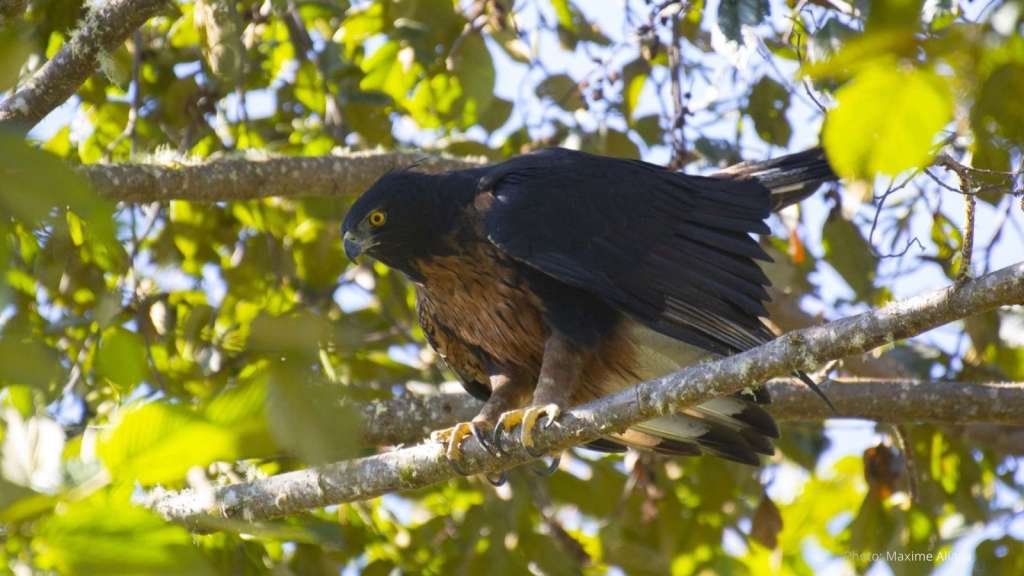
- Black-and-Chestnut Eagle & Andean Guan
- Scaly-naped Parrot & Crimson-mantled Woodpecker
- Bar-bellied Woodpecker & the endemic Marcapata Spinetail
- Barred & Band-tailed Fruiteaters
- Ochraceous-breasted Flycatcher & Pale-footed Swallow
Arrival: We arrive at the lodge in the late afternoon.
We will spend two full days around the lodge, exploring different altitude zones (2,500m and 1,500m).
The Lek & Gardens: Our primary target is the iconic Andean Cock-of-the-Rock. We will visit a lek where these birds perform spectacular courtship displays. The lodge gardens are a hotspot for hummingbirds, including:
- Wire-crested Thorntail & Rufous-crested Coquette
- (And over 20 other species!)
Mixed Flocks & Specialties: We will explore the trails for mixed flocks and bamboo specialists. Key species include:
- Solitary Eagle & Rufous-capped Thornbill
- Crested & Golden-headed Quetzal
- Highland Motmot & Black-streaked Puffbird
- Amazonian Umbrellabird & Chestnut-crested Cotinga
- Inca Flycatcher (endemic) & Yungas Manakin
Wildlife & Nightlife: We may spot primates such as Gray’s Woolly Monkey and Large-headed Capuchin. At night, we’ll look for:
- Lyre-tailed Nightjar
- Band-bellied Owl
- Rufescent Screech-Owl
Overnight: Cock of the Rock Lodge.
We head further along the Manu Road to Manu Biolodge, descending nearly 1,000 meters to find new species.
Roadside Birding: As we drive down, keep your eyes peeled for:
- White-eared Solitaire & Black-streaked Puffbird
- Lanceolated Monklet & Crimson-bellied Woodpecker
- Stripe-chested Antwren & Beryl-spangled Tanager
Open Areas: As the road drops into agricultural communities, we’ll look for King Vultures, Greater Yellow-headed Vultures, Roadside Hawks, and the endemic Black-backed Tody-Tyrant.
Overnight: Manu Biolodge.
Located on the edge of the Amazon Rainforest, this area offers diverse habitats and a renowned ground feeder system designed for elusive species like tinamous and antpittas.
Trail System: We’ll explore second-growth, bamboo (Guadua), and primary forests for:
- White-browed Antbird & Plain-winged Antshrike
- Pygmy Antwren & Rufous-capped Nunlet
- Chestnut-backed Antshrike & Russet-backed Oropendola
Atalaya Mirador Excursion: One morning we’ll head to the Atalaya Mirador for landscape photos and the morning flight of Military Macaws. We’ll also look for Blue-headed Macaws, Bluish-fronted Jacamar, and Fiery-capped Manakin.
Night Walks: We will search for Tawny-bellied Screech-Owl, Tropical Screech-Owl, Black-banded Owl, Common Potoo, and Black-headed Night Monkey.
Overnight: Manu Biolodge.
We head down the Alto Madre de Dios River in motorized boats (approx. 4 hours) to the Manu River, continuing to the comfortable Manu Wildlife Center.
Riverside Species: From our roofed, comfortable boats, we’ll spot:
- Pied Lapwing & Collared Plover
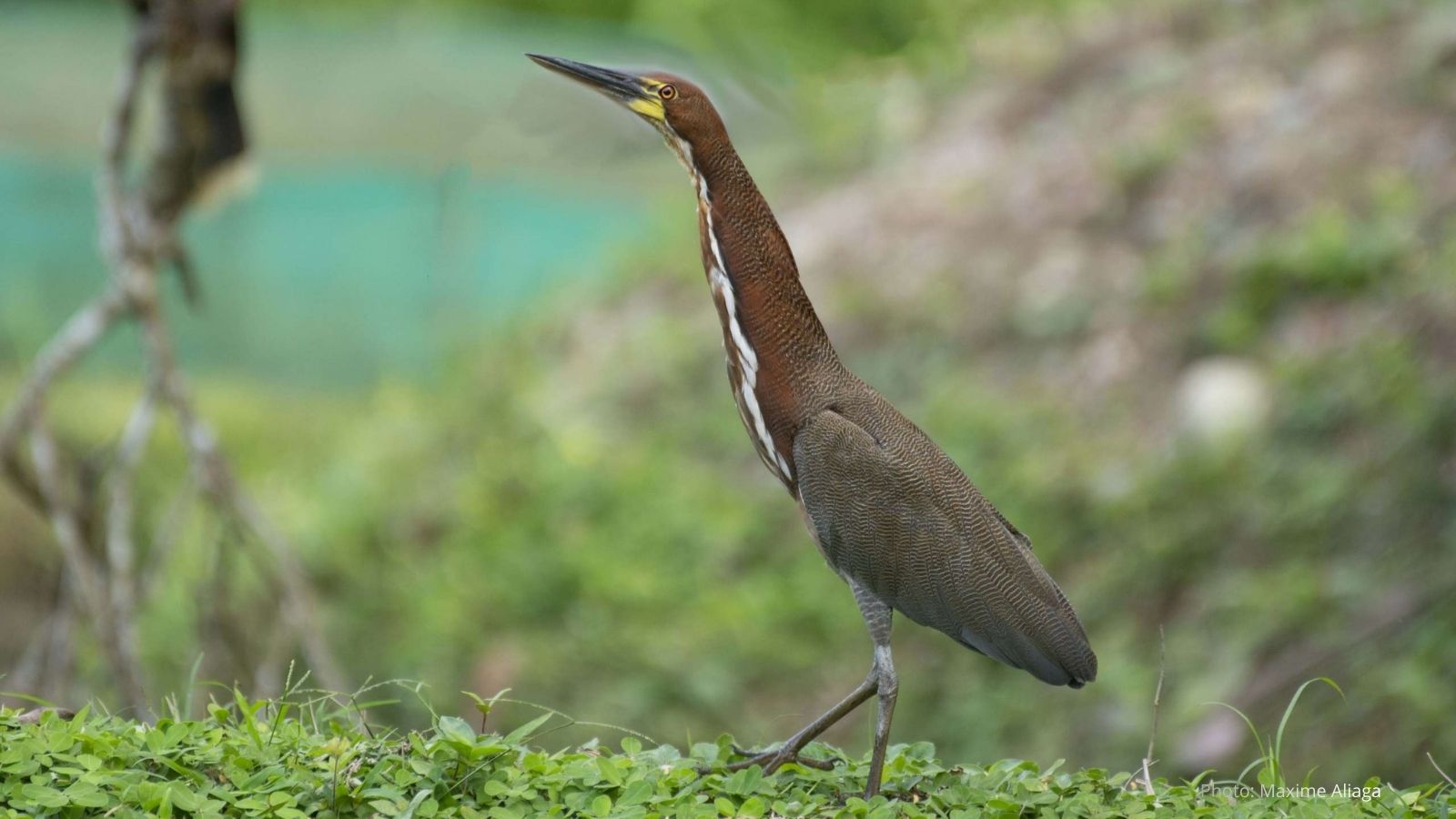
- Fasciated Tiger-Heron & Orinoco Goose
- Large-billed & Yellow-billed Terns
- Various Macaws and Birds of Prey
Arrival: We aim to arrive at Tambo Blanquillo in the late afternoon. The bungalows feature en-suite bathrooms and hot water.
Overnight: Tambo Blanquillo.
Canopy Tower: Early morning at the canopy observation tower (accessed by metal stairway) to photograph canopy flocks, including Sclater’s Antwren, Red-billed Pied-Tanager, and honeycreepers.
Oxbow Lake: In the afternoon, we visit a nearby lake to see:
- Hoatzin & Sungrebe
- Agami Heron & Black-billed Seed-Finch
- Silvered & Band-tailed Antbirds
- We may also spot one of the two Giant Otter families.
Overnight: Tambo Blanquillo.
Macaw Clay Lick: A photographer’s paradise (weather permitting). We watch families of Orange-cheeked, Blue-headed, and Mealy Parrots, followed by Red-and-Green and Scarlet Macaws. We have even spotted Ocelot here!
River Journey to Los Amigos: Continuing to Los Amigos, we scan the shore for Cocoi Herons, Wood Storks, and Kingfishers.
- Note: Upon arrival, we ascend 280 steps from the river to the lodge.
- Evening: Dinner followed by a science presentation by the station’s coordinator.
Overnight: Los Amigos.
Three full days exploring the conservation area bordering Brazil. We will start at dawn, break for lunch/siesta, and head out again in the late afternoon.
Cocha Lobo (Oxbow Lake): An all-day excursion to see the impressive Giant Otter. En route, look for Black-tailed Trogon, Bluish-fronted Jacamar, and mixed flocks of Woodcreepers and Antshrikes. On the lake, we paddle for Hoatzin, Sungrebe, and American Pygmy Kingfisher.
Bamboo Specialists: We’ll explore dense bamboo forests for Peruvian Recurvebill, Bamboo Antshrike, Manu Antbird, and White-cheeked Tody-Flycatcher.
Brazil Nut Trails (Terra Firme): We’ll search upland forest for Pavonine Quetzal, Pale-winged Trumpeter, White-throated Jacamar, and the range-restricted Black-faced Cotinga.
Pozo Don Pedro (Palm Swamp): An aguajal habitat offering sightings of Blue-and-yellow Macaws, Point-tailed Palmcreeper, and Agami Heron.
General Birding: We’ll scan for mixed flocks (White-winged Shrike-Tanager, Broad-billed Motmot) and check the gardens for Undulated Tinamou, Paradise Tanager, and Green-backed Trogon.
- Wildlife Note: Keep an eye out for 11 species of primates, including the Emperor Tamarin!
Overnight: Los Amigos.
We begin with an early boat departure to Puerto Maldonado.
River & Highway Scan: We’ll scan the river for Jabiru, Black Skimmers, and Macaws. On the highway to the airport, we’ll look for Red-breasted Blackbirds and Southern Lapwings.
Departure: Once in Puerto Maldonado, we will ensure you make your return flight to Cusco or Lima.
End of an extraordinary photography tour!
| TRAVELERS | 1 | 2 | 3 | 4 | 5 | 6 |
|---|---|---|---|---|---|---|
| PRICE PER PERSON | $10,465 USD | $6,365 USD | $5,150 USD | $4,430 USD | $3,999 USD | $3,710 USD |